Shafts
DIN 743 · FKM guideline
Deflection, stresses, fatigue strength, critical speeds, bearing reactions.
Machine-element calculation software
To DIN, ISO, VDI and EN. Every check shows its formula, your values and the clause it comes from.
Work by hand, or let your AI agent (Claude Code, Codex) run it. See an agent session
The web app needs no account. Your designs stay on your computer. The Windows installer is not code-signed yet, so Windows may ask you to confirm.
The desktop app is for Windows. On a Mac or a phone, use the web app.
Axomek is new and not code-signed yet, so your browser and Windows may warn you.
If your browser says the file isn’t commonly downloaded, choose Keep. Some browsers call it Allow download, sometimes under the ⋯ menu.
If Windows then says “Windows protected your PC”, choose More info.
Windows then names the publisher: Unknown publisher. Choose Run anyway.
It installs Axomek and axomek for your Windows user only (no administrator rights needed), adds axomek to your PATH, opens .axomek project files on a double-click and then updates itself.
Its SHA-256, to check the file arrived unchanged: d60e09332870d90670609d4a1b5ee4bd339710a6dad81cbf25e2fdb383972907. How to check: the command for your system prints the same value (Windows prints it in capitals).
On Windows, in PowerShell:
Get-FileHash ~\Downloads\Axomek_0.3.3_x64-setup.exe -Algorithm SHA256On macOS or Linux, in a terminal:
shasum -a 256 ~/Downloads/Axomek_0.3.3_x64-setup.exeCan’t install on this computer? Use the web app instead: every module runs in your browser.

The left and right arrow keys switch machines.
BR1 of the gearbox · cut open22217 spherical roller bearing · L10mr 58,229 hL10mr58,229 h ≥ 20,000 hS05.459 ≥ 2Contact stress1,712 MPaSpeed1,430 rpm ≤ 1,801 rpm Ball screw lift · nut cut open, end-cap returnBall screw lift · L10 28,524 hRating life28,524 h ≥ 20,000 hStatic safety15.52 ≥ 2Critical speed1,500 rpm ≤ 4,251 rpmChecks7 of 7 pass Belt-driven ball-nut EPS · the steering gearBall-nut steering gear · ball nut life 1,157 h ≥ 500 hBall nut life1,157 h ≥ 500 hBall nut S07.90 ≥ 2Ball nut efficiency94.8 %01 How it works
Model a part or a whole drive, solve it to the standards, and hand over a report a checker can follow.
Draw the shaft, place bearings, gears, belts and loads, or start from one of 43 examples. Gear pairs and drives load the shafts they sit on.
Every change solves the whole project. Each check is shown against its limit, and the Overview lists the ones closest to failing, with what would help.
Save a report as PDF or Word with revisions and sign-off. Compare two versions of a design, input by input and check by check.

02 AI agents
Claude Code, Codex or your own scripts work through the axomek command line and its MCP server. The agent changes the project; the engine solves it to the standards and reports every check. You review the change like any other.
We are fitting a stronger motor: 0.011 N·m instead of 0.01. Make the gearhead pass with the smallest change.
axomek set gearhead.axomek planetaries.PG1.torque 0.011Nmupdated PG1
axomek check gearhead.axomekstatus file checks worst utilisation / error FAIL gearhead.axomek 5 of 6 pass, 3 not checked 1.02 planetaries.PG3.minContactSafety - gearhead.axomek: not checked: planet bearings for PG1 (not assessed: none linked, and nothing else rates them: link a planet bearing); planet bearings for PG2 (not assessed: none linked, and nothing else rates them: link a planet bearing); planet bearings for PG3 (not assessed: none linked, and nothing else rates them: link a planet bearing) 1 file: 0 pass, 1 FAIL
axomek fix gearhead.axomek --check planetaries.PG3.minContactSafetyMake it pass (6 solves) planetaries.PG3.minContactSafety FAIL 0.9807 against 1 (102 % of its limit) 1. PG3 face width b: 4.5 mm → 5 mm (11.1 % change): 1.013 (98.7 %), every check passes axomek set gearhead.axomek planetaries.PG3.faceWidth 5mm 2. PG3 module: 0.6 mm → 0.7 mm (16.7 % change): 1.116 (89.6 %), every check passes also: the gear diameters and centre distance follow printf '%s' '[{"op":"updatePlanetary","id":"PG3","patch":{"normalModule":0.7}}]' | axomek apply gearhead.axomek - not enough: PG3 number of planets N: the changed project could not be solved: planetaries.PG3: With 4 planets, sun + ring teeth zs + zr must be a multiple of 4: 12 + 54 = 66, and 66 ÷ 4 = 16.5 is not a whole number, so the set can't be assembled. what helps: a wider face or a larger module, or harder flanks run again with --apply N to save proposal N
axomek fix gearhead.axomek --check planetaries.PG3.minContactSafety --apply 1saved proposal 1 (PG3 face width b) to the project
…the proposals again, as above.
axomek check gearhead.axomekstatus file checks worst utilisation / error CLOSE gearhead.axomek 6 of 6 pass (1 close to the limit), 3 not checked 0.9868 planetaries.PG3.minContactSafety - gearhead.axomek: not checked: planet bearings for PG1 (not assessed: none linked, and nothing else rates them: link a planet bearing); planet bearings for PG2 (not assessed: none linked, and nothing else rates them: link a planet bearing); planet bearings for PG3 (not assessed: none linked, and nothing else rates them: link a planet bearing) 1 file: 1 pass (1 CLOSE)
axomek diff gearhead.axomekgearhead.axomek before `axomek fix gearhead.axomek --check planetaries.PG3.minContactSafety --apply 1` (2026-11-27 04:17:46 UTC) → now Inputs: 1 changed planetaries.PG3.faceWidth 4.5 mm → 5 mm Checks: 1 flipped FAIL → PASS planetaries.PG3.minContactSafety pitting safety of PG3 is 1.013 against a minimum of 1 (99%) 1 more check kept its status with another utilisation (see --json)
Stage 3 pitting FAIL 102 % , after the change: CLOSE 99 %
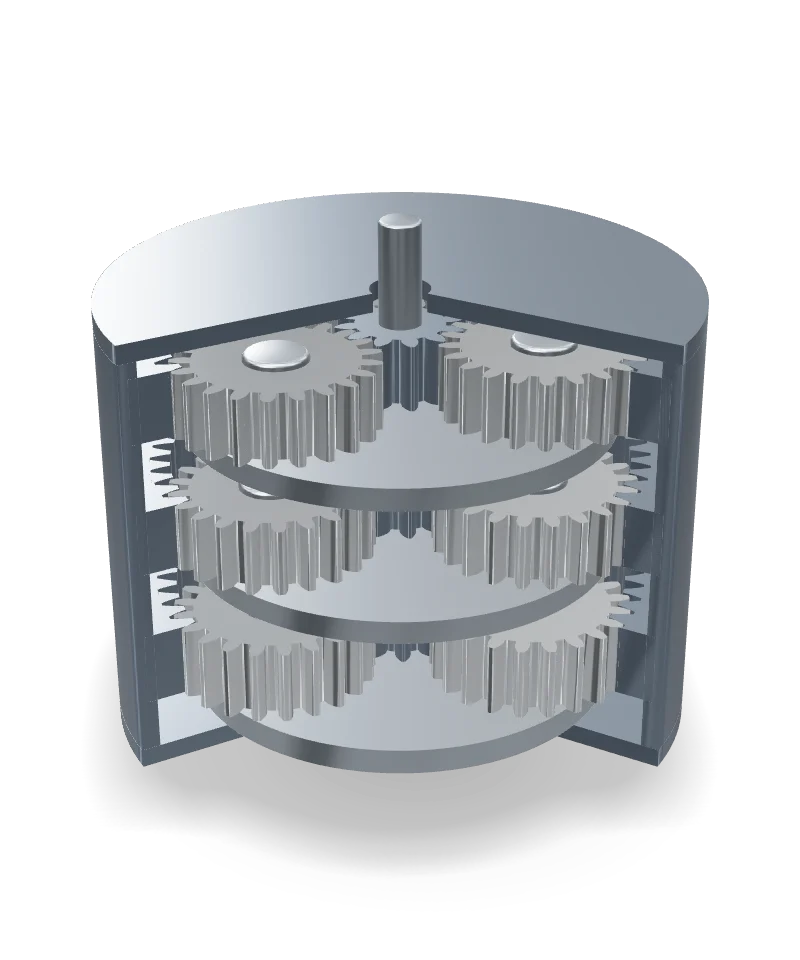 FIG. 2 Gearhead, stage 3
axomek diff lists every input the agent changed and every check that flipped, ready for a design review.
axomek check solves every project file and fails the build when a check fails, whoever made the change.
The agent proposes; the solver and the standards decide. Each result keeps its formula, values and clause.
Projects are plain JSON, so an agent’s change goes through the same Git history and review as yours.
Connect an agent through the command line and the MCP server’s tools
03 For design engineers
No black box. Each result is calculated to the standard it names, and every check opens to show how it was reached.
Every check opens to its formula, your values in it, the intermediate results and the clause, table or equation it comes from.
Shafts to DIN 743 and FKM, bearings to ISO 281 with the load distribution of ISO 16281, gears to ISO 6336, bolts to VDI 2230.
Gear forces load the shafts, the shafts load their bearings, and each bearing is rated from its own load distribution.
For a failing check, the app proposes the smallest changes that make it pass and shows which keep every other check passing.
axomek explain gearbox.axomek bearings.BR1.minLifeHoursModified rating life of BR1 = 58 229 h Method: ISO 281:2007 rating life from the element loads of the load distribution (ISO 16281:2025) Check bearings.BR1.minLifeHours: PASS, limit 20 000 h, utilisation 34.35 % Basic dynamic load rating [ISO 281:2007, 7.1] C = 225 003 N Dynamic equivalent reference load [ISO 281:2007, 7.3.1, Eq. (16)] Pref = 30 605 N Basic reference rating life [ISO 281:2007, 7.3.1, Eq. (16)] L10r = (225 003 N / 30 605 N)^(10/3) = 772.7 million rev Life modification factor, from each lamina's own load [ISO 16281:2025, 5.3, Formulae (31) to (35)] aISO = 6.466 Modified reference rating life at the required reliability [ISO 281:2007, 9.1, Eq. (23)] L10mrh = 1 · 6.466 · 9005 h = 58 229 h … 8 more steps, the references and links to the theory
Excerpt of the real output, Axomek 0.3.3. The app shows the same under Show calculation on every check.
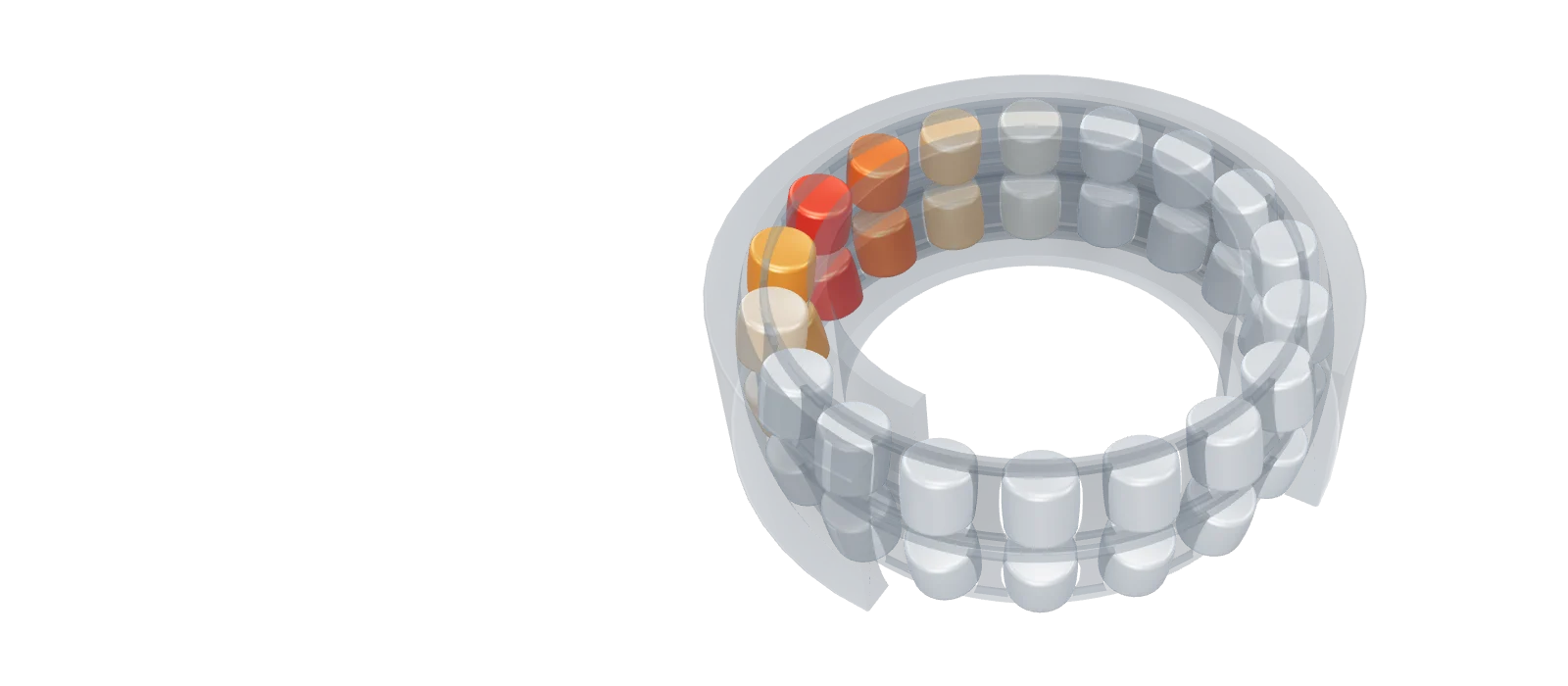 FIG. 3 BR1 · 22217 spherical roller bearing · input shaft, pinion side
BR1 is rated from the loads its shaft puts on it. The engine’s load distribution gives each roller position its load; the rollers pass through the load zone at cage speed, and the most loaded position sets the contact stress and the life above.
| Check | Value | Limit | Result |
|---|---|---|---|
| Modified rating life | 58,229 h | ≥ 20,000 h | Pass |
| Static safety | 5.459 | ≥ 2 | Pass |
| Speed | 1,430 rpm | ≤ 1,801 rpm | Pass |
04 For engineering managers
Fewer review loops, less rework and a tool you can approve: every number has a source, every change is visible, and nothing leaves your computers unless you choose.
axomek diffaxomek check solves many project files at once and fails the build when a check fails..axomek files of plain JSON, kept in Git beside the CAD and the drawings.axomek check gearbox.axomek narrow.axomek status file checks worst utilisation / error CLOSE gearbox.axomek 46 of 46 pass (3 close to the limit), 14 warnings, 1 not checked 0.9793 gears.G1.wheelContactSafety FAIL narrow.axomek 42 of 46 pass (3 close to the limit), 15 warnings, 1 not checked 1.296 gears.G2.wheelBendingSafety - gearbox.axomek: not checked: deflection for SH1 (no limit set) - narrow.axomek: not checked: deflection for SH1 (no limit set) 2 files: 1 pass (1 CLOSE), 1 FAIL axomek diff gearbox.axomek narrow.axomek Inputs: 1 changed gears.G2.faceWidth 100 mm → 40 mm Checks: 4 flipped PASS → FAIL gears.G2.pinionContactSafety pitting safety of the pinion of G2 is 1.071 against a minimum of 1.2 (112%) PASS → FAIL gears.G2.pinionBendingSafety tooth root safety of the pinion of G2 is 1.171 against a minimum of 1.5 (128%) PASS → FAIL gears.G2.wheelContactSafety pitting safety of the wheel of G2 is 1.088 against a minimum of 1.2 (110%) PASS → FAIL gears.G2.wheelBendingSafety tooth root safety of the wheel of G2 is 1.157 against a minimum of 1.5 (130%) 2 more checks kept their status with another utilisation (see --json) Results: 3 moved powerLoss 3610 W → 3796 W (+5.1 %) gears.G2.contactSafety 1.548 → 1.071 (-31 %) gears.G2.bendingSafety 2.823 → 1.157 (-59 %) Warnings: 1 new, 0 gone + gears.G2.mounting.wheel.mass G2's wheel mass 234.7 kg is more than twice the 97.75 kg of a solid steel disc of its size (Ø629.6 × 40 mm): its critical speeds, and with gravity its shafts and bearings, are rated with it
axomek check exits non-zero on a failure, so a pipeline stops there.

05 Modules
Single parts or complete drives. Modules share one model, so a gear pair loads its shafts and the shafts load their bearings.
DIN 743 · FKM guideline
Deflection, stresses, fatigue strength, critical speeds, bearing reactions.
ISO 281 · ISO 16281 · ISO 76
Load distribution, contact stress, rating life, static safety, thermal speed.
ISO 6336 · ISO 10300 · DIN 3996 · ISO/TR 14521 · VDI 2736
Pitting, tooth root and scuffing; planetary, bevel, worm and plastic gears, rack and pinion.
VDI 2230 · EN 1993-1-8 · EN 1993-1-9
Preload, tightening torque, bolt and joint safety; weld throat stresses and fatigue.
DIN 7190 · DIN 6892 · ISO 286
Interference fits, torque capacity, flank pressures.
EN 13906
Compression, extension and torsion springs: rate, stresses, buckling, fatigue.
ISO 3408 · ISO 14728
Life, rigidity, critical speed and buckling of ball screws and profile rail guides.
ISO 6336 · ISO 3408 · DIN 3996 · VDI 2736
Wheel to tie rods solved together: rack, pinion, ball nut, belt, worm and motor.
Hertz theory · FE
Belts and chains, Hertzian contact stress, housing seat stiffness by finite elements, motor rotors.
06 Verification
2,371 of 2,371 validation cases pass
| Group | Cases | Pass |
|---|---|---|
| Bearings: the reference bearing solver | 291 | 291 |
| Worm gears: ISO/TR 14521 Annex J | 142 | 142 |
| Bolted joints: VDI 2230 Annex B examples | 109 | 109 |
| Press fits: a steel's yield strength at size, at most its size class's minimum | 105 | 105 |
| Worm gears: VDI 2736-3 Annex A | 95 | 95 |
| Shaft strength: DIN 743 Beiblatt 1 examples | 78 | 78 |
| Gears: ISO/TR 6336-30 example 5 | 53 | 53 |
| Gears: ISO/TR 6336-30 example 1 (Annex A) | 51 | 51 |
| Other groups (109) | 1,447 | 1,447 |
| Total | 2,371 | 2,371 |
Every case with its reference, expected value, result and deviation, for your tool approval.
07 Examples
All 43 examples, under the module each is about. Each opens in the web app on the view its picture shows; your first change makes it a project of your own.
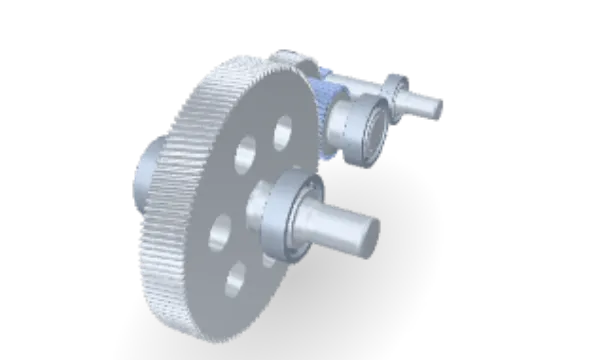 Two-stage helical gearbox
A three-shaft helical gearbox in 3D, its first stage a published worked example.
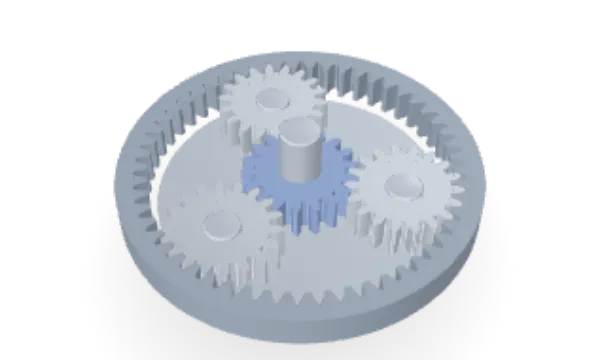 Planetary stage
A sun, three planets and a held ring gear, both meshes of each planet rated.
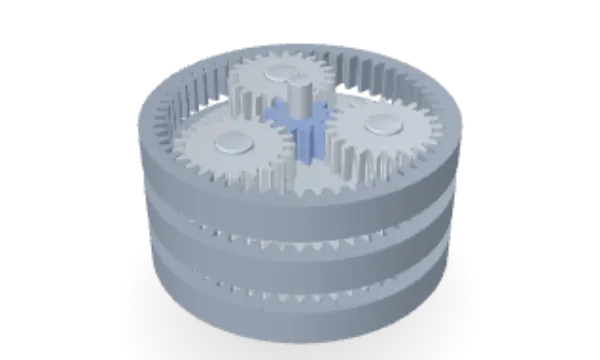 3-stage planetary gearbox
Three planetary stages in one gearhead, each carrier's sun driving the next: 166:1 in all.
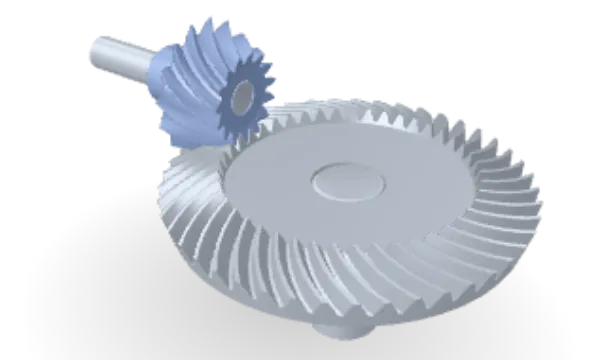 Spiral bevel pair
A spiral bevel pair at 90°: its cones, the forces on its shafts and its tooth safeties.
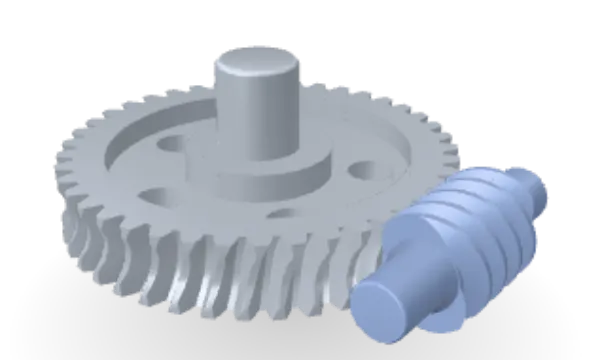 Worm drive
A two-start worm and bronze wheel: efficiency, wear, pitting, root and temperature.
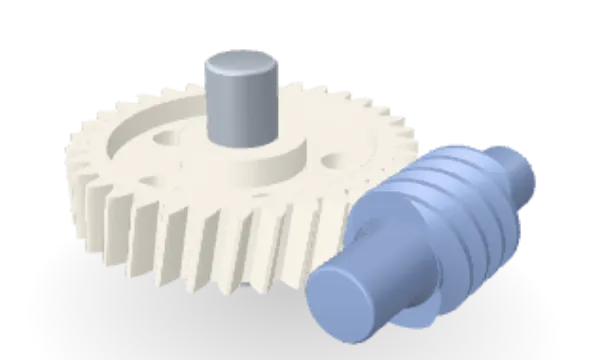 Column EPS assist gear (plastic worm)
The plastic worm gear that gives a column power steering its assist, rated on its own.
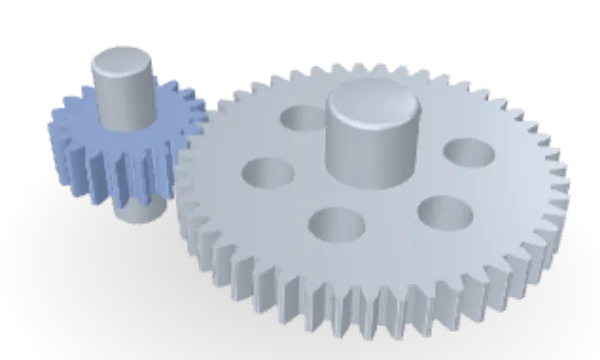 Spur gear pair
A pair of case-hardened spur gears at 150 N·m: pitting and tooth root safety.
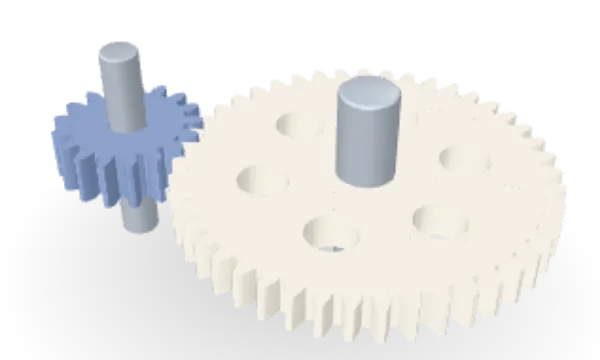 Plastic gears
A steel pinion with a greased plastic wheel, and a dry plastic pair: temperatures, wear and safety.
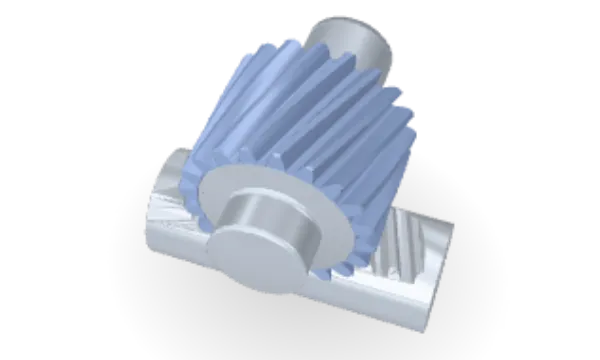 Gantry axis rack and pinion
One drive of a gantry's long axis: a helical pinion on a servo gearbox driving a ground rack.
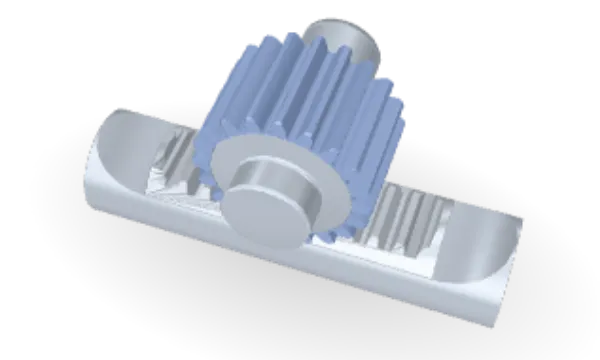 Rack-and-pinion mesh
A pinion and rack on their own: tooth root, flank and static safety of both.
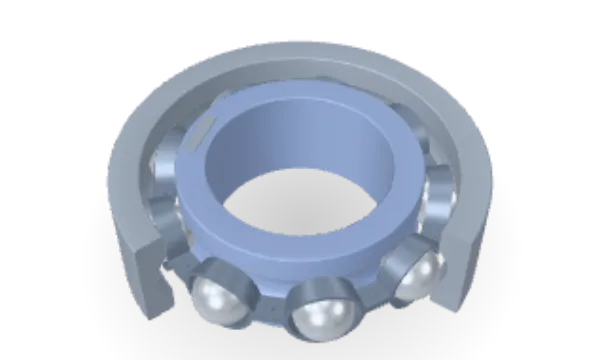 Single bearing · 6207
One deep groove ball bearing under radial and axial load, ball by ball, with its life.
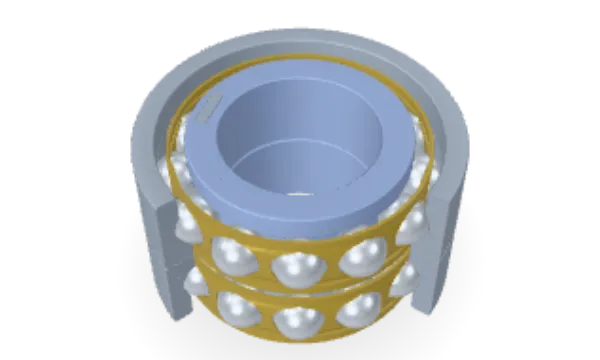 Bearing pair · 7206 B, O arrangement
Two angular contact ball bearings back to back: how the preload and the thrust share between them.
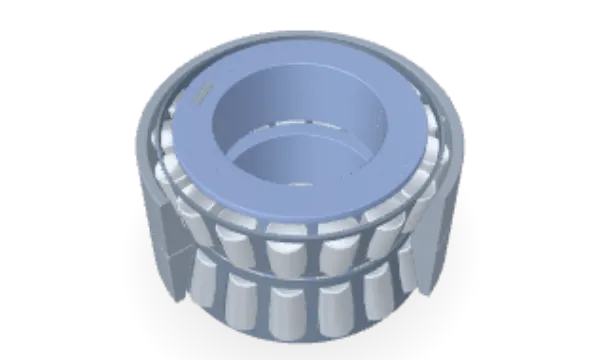 Bearing pair · 30206, O arrangement
Two preloaded tapered roller bearings back to back: their axial share and the temperature they run at.
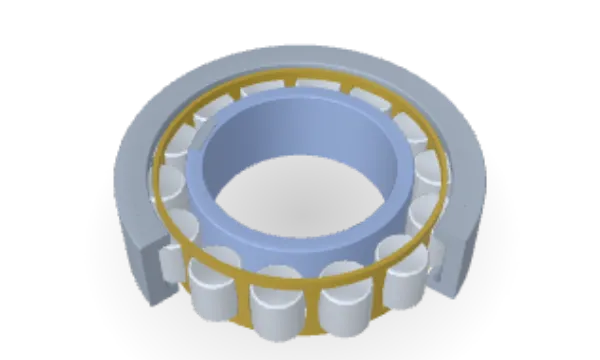 Single bearing · NU 206
A cylindrical roller bearing under radial load only: the load roller by roller, and its life.
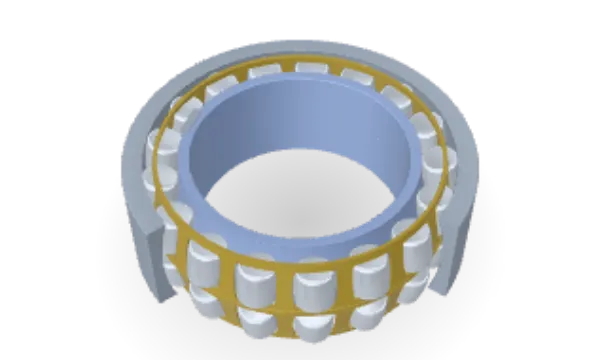 Single bearing · 22210
A spherical roller bearing under a heavy radial and some axial load: both rows, roller by roller.
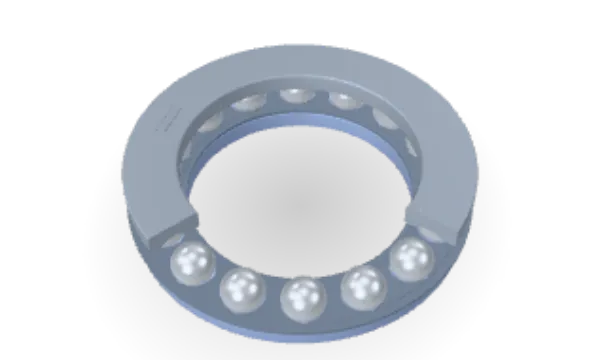 Single bearing · 51107
A thrust ball bearing under pure axial load: every ball takes the same share.
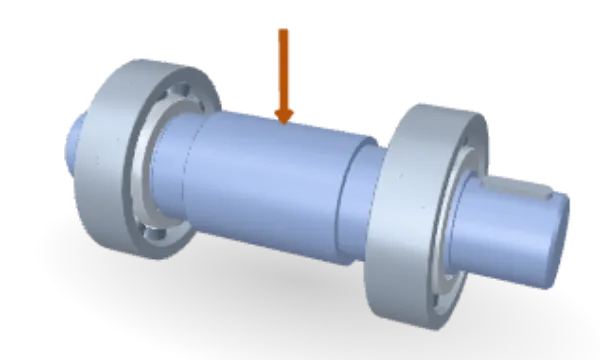 Simple shaft
A plain shaft on two bearings under one load, whose deflection fails until it is stepped.
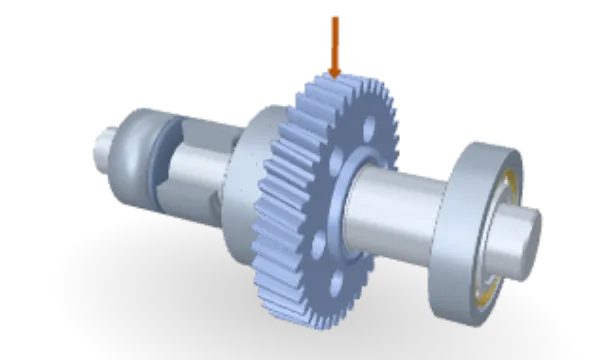 Drive shaft with gear and coupling
A stepped gearbox output shaft with a helical gear and a coupling, rated over a duty cycle.
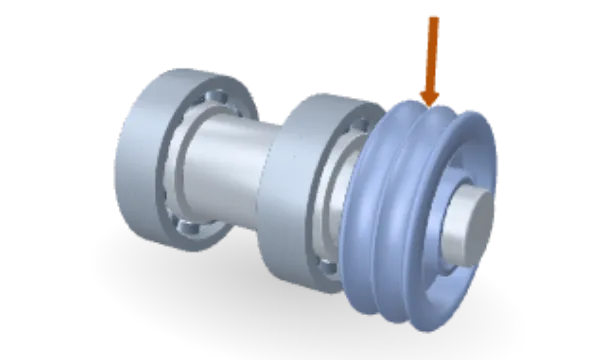 Motor shaft with overhung pulley
A motor shaft with a belt pulley overhung on one end: deflection, strength and bearing lives.
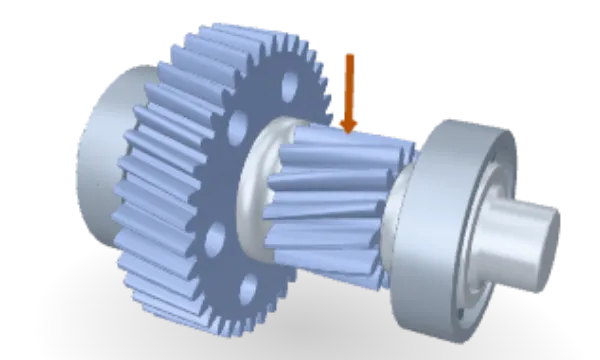 Gearbox intermediate shaft
A shaft carrying a gear and a pinion, too flexible until the tutorial stiffens it.
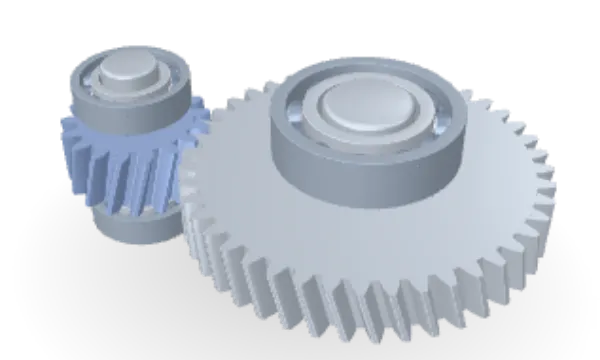 Single-stage gearbox
Two shafts coupled by a helical gear pair, its mesh forces loading their four bearings.
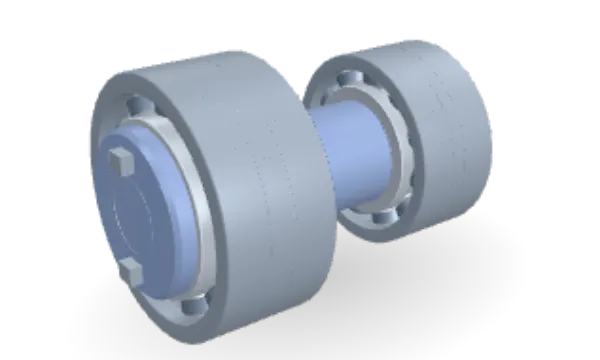 Machine tool spindle
A machine tool spindle on preloaded angular contact pairs at 12 000 rpm, and its nose stiffness.
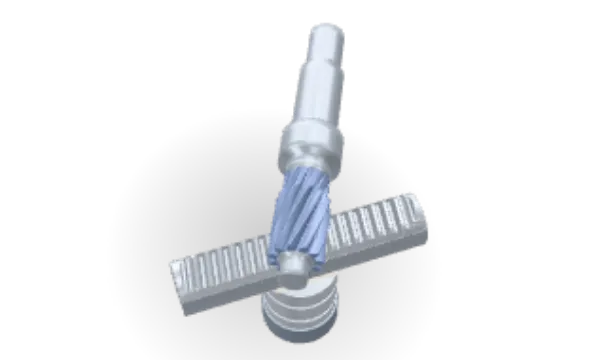 Steering rack
A steering rack with its pinion, yoke and tie rods, the rack rated as a loaded bar.
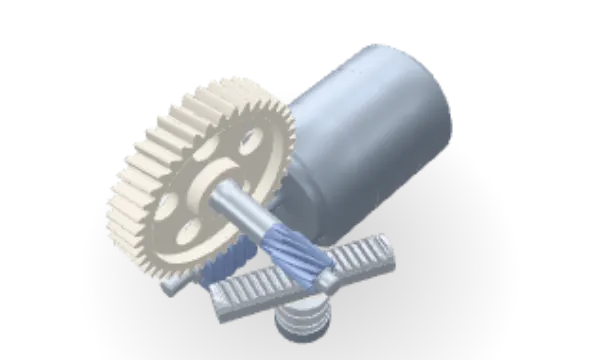 Dual-pinion EPS
A dual-pinion power steering: the driver turns one pinion, an assist motor the other by a worm.
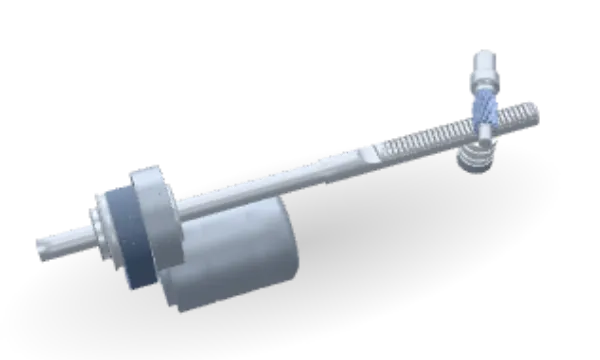 Belt-driven ball-nut EPS
A power steering assisted at the rack: a motor turns a ball nut on it through a timing belt.
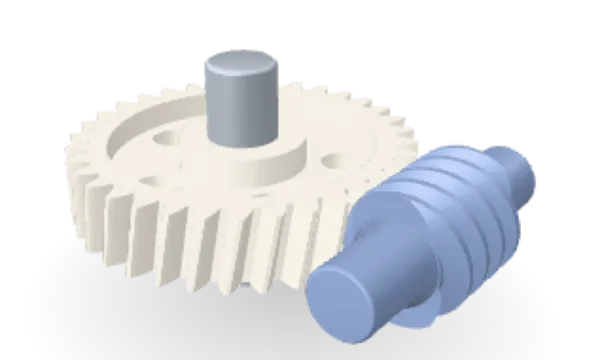 Column EPS
A column power steering: a motor turns a plastic worm wheel on the column, which drives the rack's pinion.
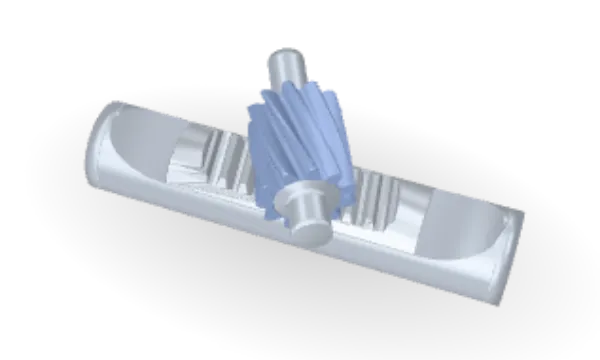 Steering rack duty
A steering pinion and rack over parking and on-centre strokes, and a kerb strike.
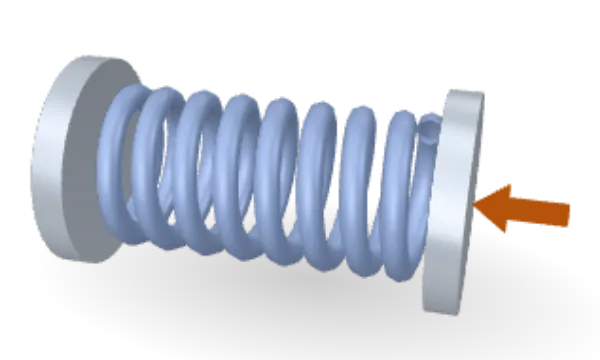 Compression spring · valve
A shot-peened valve spring worked ten million times: rate, solid length, buckling and fatigue.
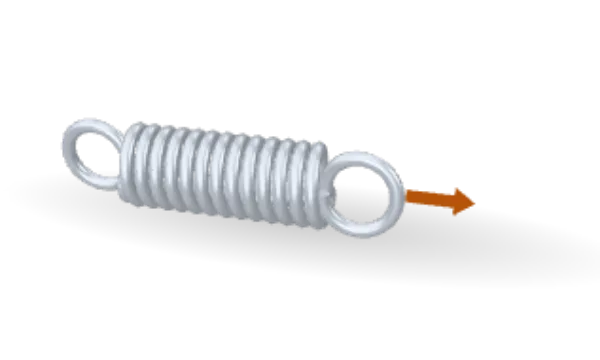 Extension spring · hooks
An extension spring with initial tension and English hooks: the hooks' bending and twist govern.
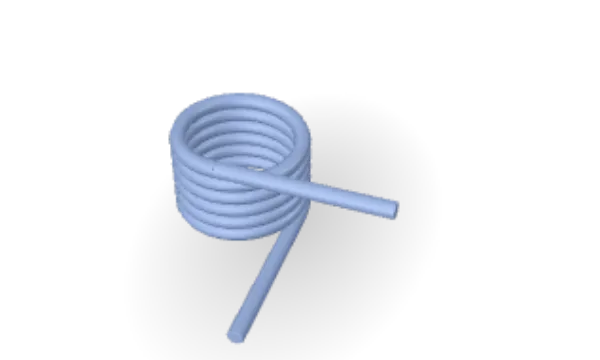 Torsion spring · hinge
A cover's return spring on its hinge pin, wound to 180°: torque, bending stress and the coils closing in.
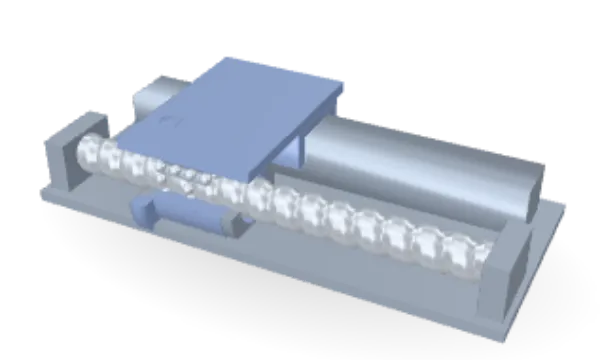 Ball screw and linear guides
A gantry table on two profile rails, driven by a ball screw: carriage and screw life.
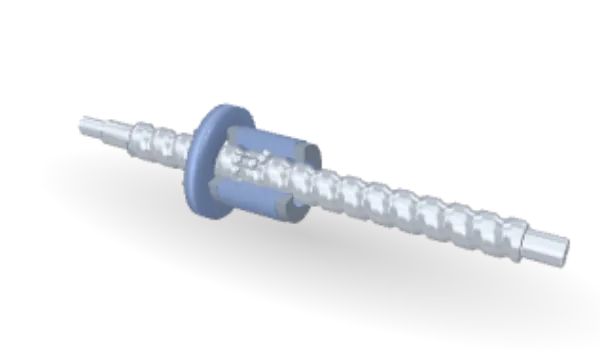 Ball screw lift (single nut, screw turned)
A vertical lift on a ball screw with one nut and no preload: life, buckling and motor torque.
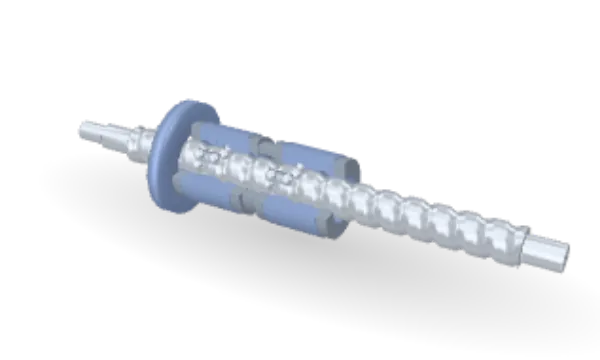 Ball screw on its bearings (preloaded double nut, screw turned)
A machine axis's ball screw on its own shaft and bearings: both rated over each step of its cycle.
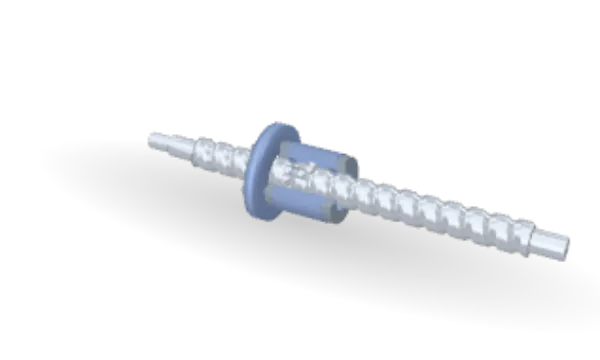 Rotating-nut actuator (single nut, nut turned)
A ball screw driven at its nut, which turns in a belt-driven hollow shaft: lifting, holding, lowering.
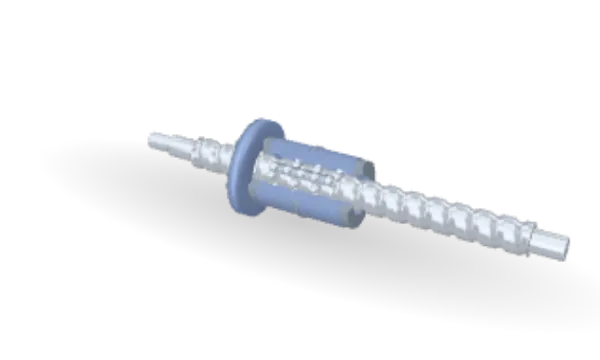 Servo press axis (preloaded single nut, nut turned)
A press whose screw does not turn: its preloaded nut turns in a belt-driven shaft, no play either way.
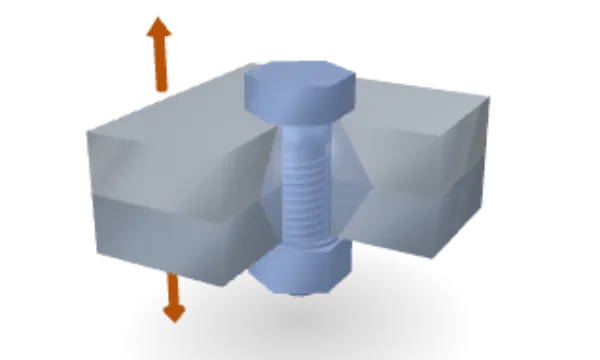 Bolted bracket
A bracket held by M12 bolts under axial pull and shear: the load and safety of each bolt.
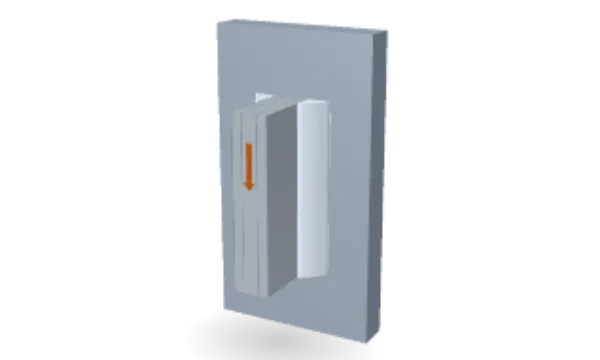 Welded bracket
A bracket on fillet welds under an eccentric load, and a lifting lug: throat stresses and fatigue.
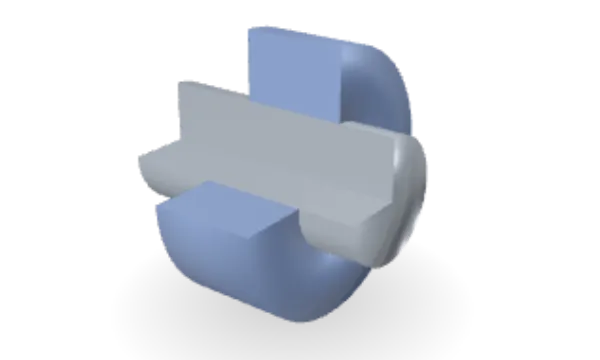 Shrink-fit hub
A hub shrunk onto a shaft: interference, contact pressure, torque capacity and heating.
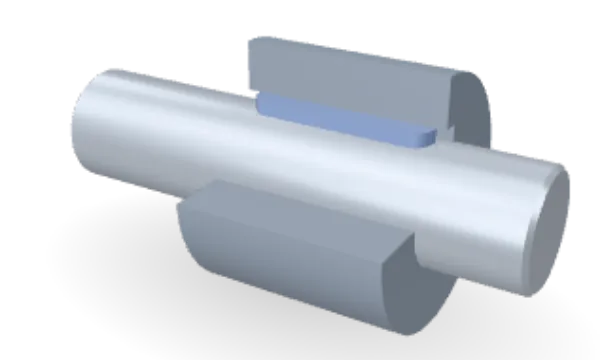 Keyed hub and splined shaft
A feather key and a splined shaft at 300 N·m: flank pressures on shaft, hub and key.
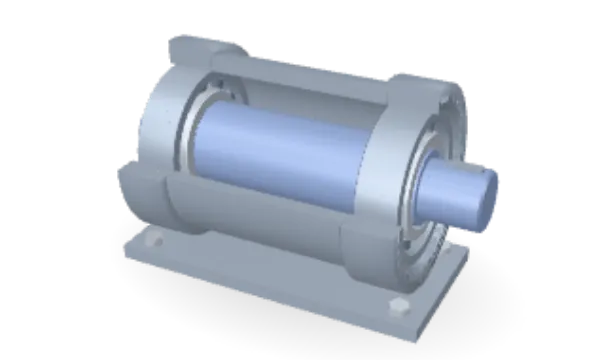 Motor shaft in a cast housing
A motor shaft whose bearings sit in cast end shields, their seats' stiffness found in 3D.
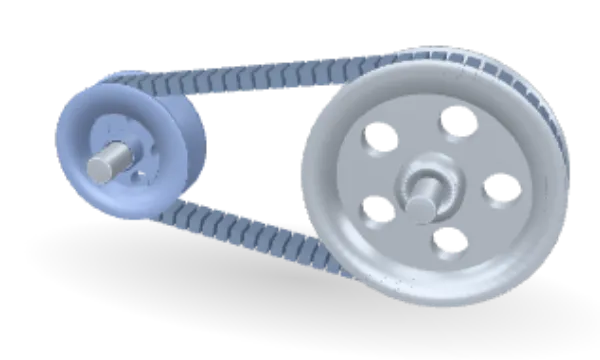 V-belt fan drive
A motor driving a fan shaft through a V-belt: the belt's pull and the loads on both shafts.
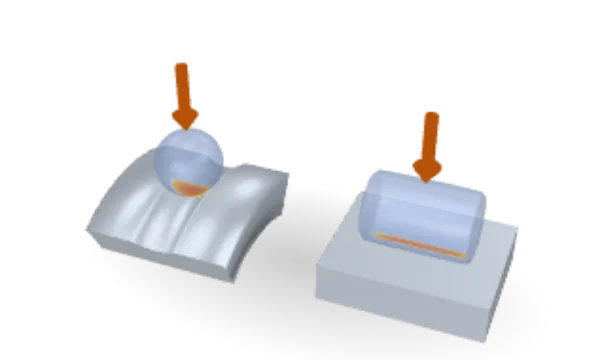 Ball and roller on raceways
A ball and a roller on their raceways: contact area, pressure and the stresses below it.
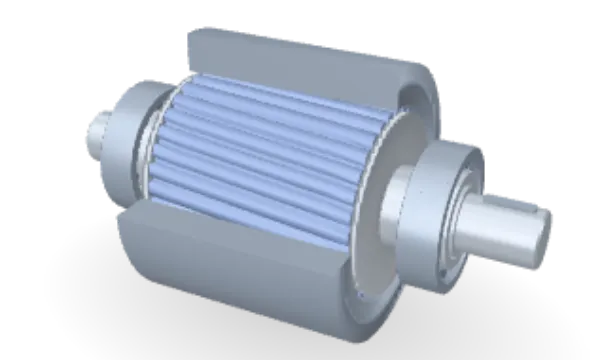 Electric motor
An induction motor shaft whose rotor's magnetic stiffness lowers its critical speed.
08 Questions
More in the guides, which cover every module and the theory behind it.
Not for the web app: every module, the assembly view and the report work without one, with your work kept in the browser or saved to files. An account adds cloud projects, the assistant, the Windows desktop app and the axomek command line.
On your computer: in the web app the engine runs in the browser as WebAssembly, in the desktop app natively. A project leaves your computer only when you save it as a cloud project, keep your own templates or parts with your account, ask the assistant about it or attach it, or a screenshot of it, to a problem report. Privacy in the app lists each case.
Only through the axomek command line or its MCP server, on project files you give it. The engine solves every change to the standards; axomek diff shows what changed and axomek check fails a pipeline when a check fails. The command line guide shows how to set it up.
Each release comes with a verification and validation manual (PDF): 2,371 cases in 117 groups, each with its reference, expected value and result. The verification page lists the automated suite, group by group.
axomek check exits with a non-zero code when a check fails or a file cannot be solved. Checking designs in CI has a GitHub Actions example.
Yes, in the browser: Safari, Chrome, Edge or Firefox, on macOS, Linux or Windows. The desktop app is for Windows.
Open an example in the browser in a few seconds. No account, no installation.